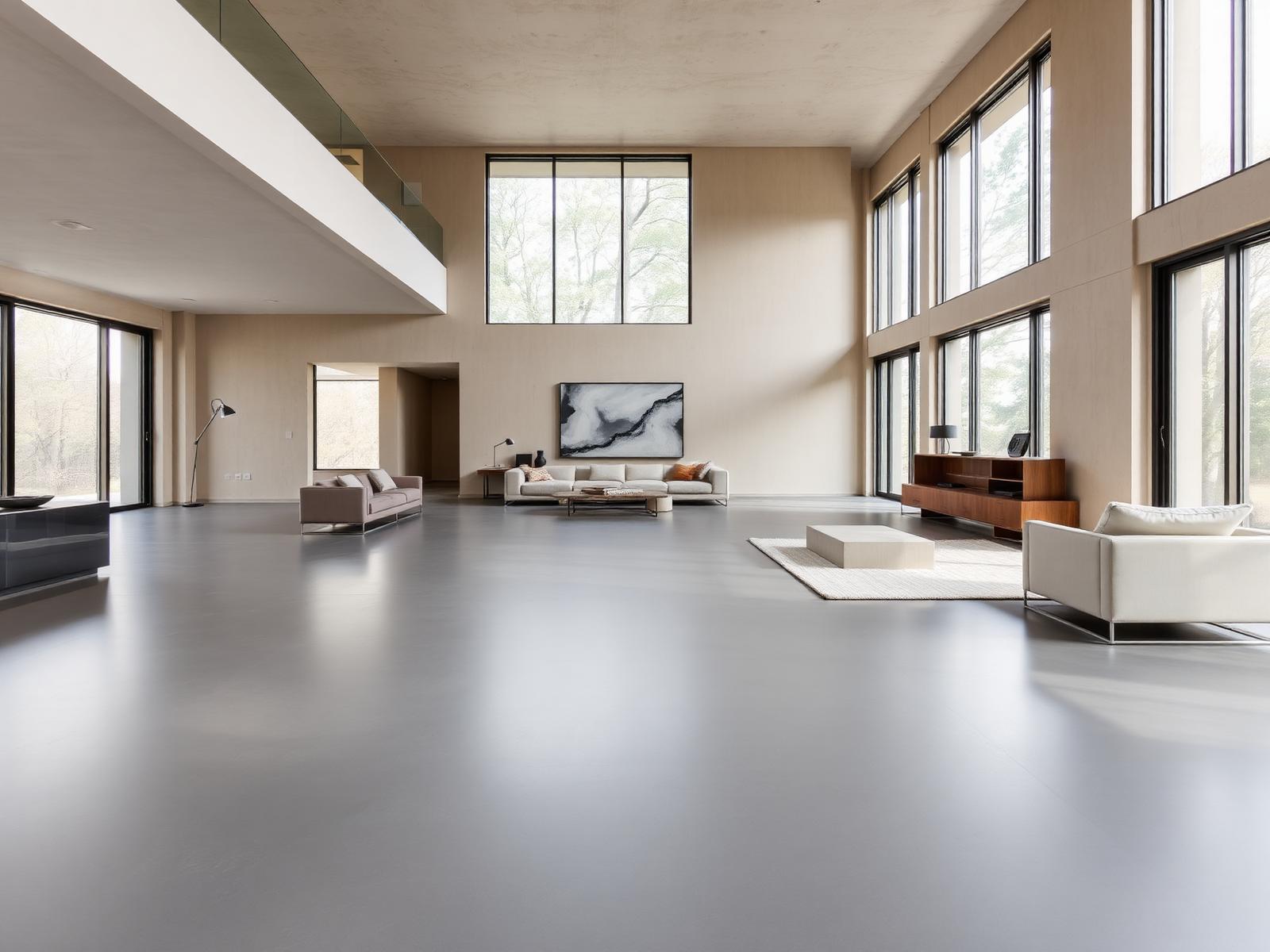
What to expect from a hand-trowelled microcement floor — substrates, thickness, durability, underfloor heating and cost.
01
A continuous plane, 2–3mm thin
A microcement floor reads as a single calm surface — perfect for open-plan living, considered hospitality interiors and designer retail. At just 2–3mm thick, it sits comfortably under existing skirtings and doors with minimal trimming.
02
Substrates: install over what you already have
We can apply microcement floors directly over sound concrete, screed, tile, plywood and engineered substrates. In most renovations this eliminates demolition entirely — saving time, money, dust and landfill.
Each substrate is assessed on site. Movement joints, cracks and weak areas are addressed before any microcement is laid.
03
Underfloor heating and acoustic performance
Microcement is fully compatible with hydronic and electric underfloor heating systems and conducts heat efficiently due to its thin profile.
Acoustically, microcement behaves similarly to polished concrete or stone. For upper-level or apartment installs, we discuss acoustic underlays at the consultation stage.
04
Durability and protection
Sealed with Mineral Fox / Mineral Fox protective sealer systems, microcement floors are rated for residential, retail and hospitality wear. Furniture pads and felt feet are recommended under heavy items, as with any premium floor finish.
05
Cost expectations
Microcement flooring is priced per square metre and varies with area, substrate condition, colour and access. Larger continuous areas are more economical per m² than tight, broken-up spaces. We provide fixed quotes after a site visit.