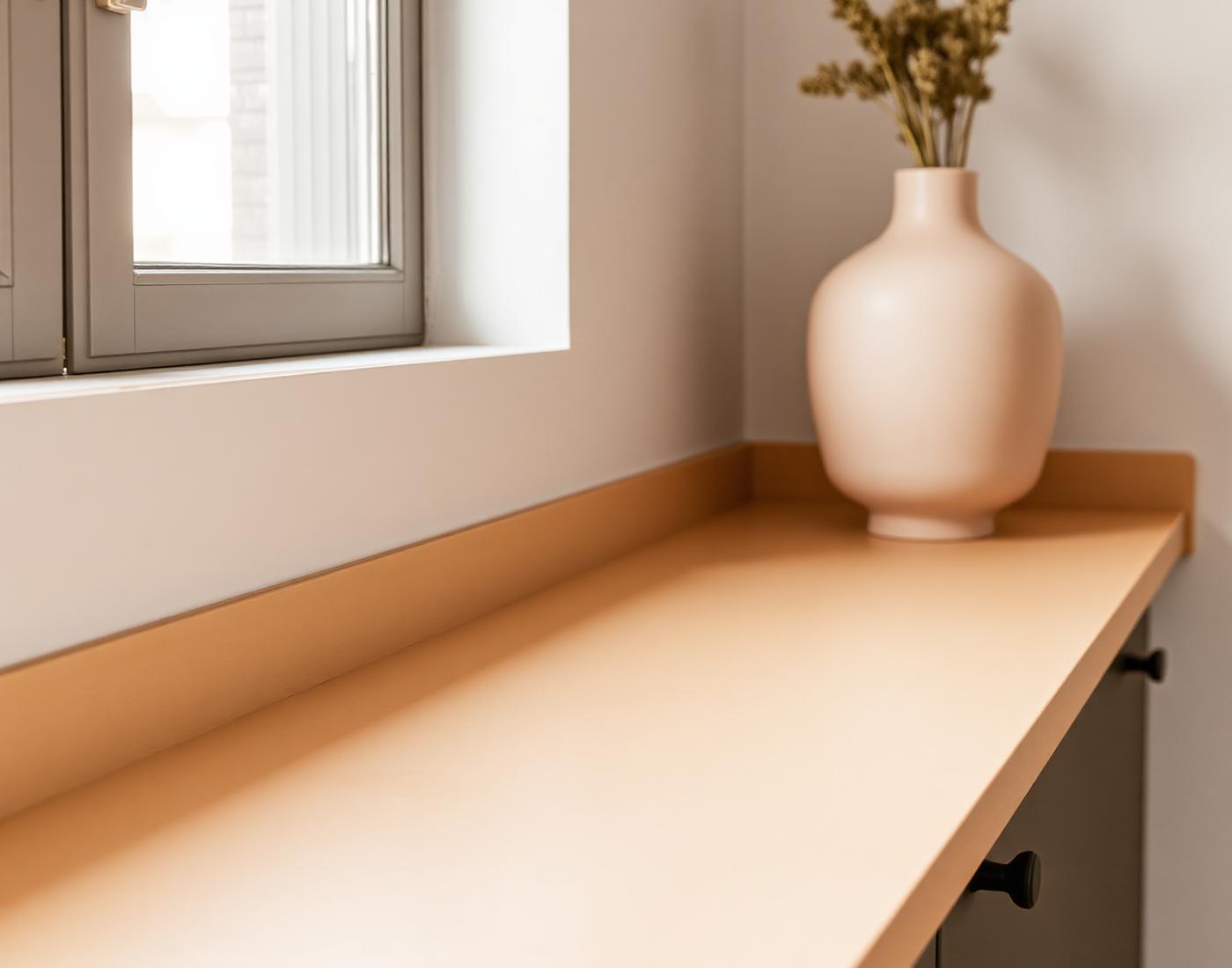
How microcement benchtops are built on site, how they perform, and how they compare to stone and engineered surfaces.
01
Built by hand, in place
Microcement benchtops are constructed on a stable substrate — typically high-grade ply or fibre cement formed by your cabinetmaker — and then hand-finished in place. Edges, returns and waterfall ends are wrapped seamlessly with no visible joins.
02
Profiles, edges and integrated basins
We can shape square, soft-eased or chamfered edges, integrate drainage grooves, and wrap around integrated basins for a fully monolithic vanity or kitchen island.
03
Performance and care
Sealed with Mineral Fox / Mineral Fox high-performance topcoats, benchtops resist heat, water and stains. As with natural stone, we recommend trivets under very hot cookware and prompt wiping of acidic spills.
04
Microcement vs stone
Stone is harder and cooler underhand. Microcement is warmer, fully seamless across long runs, lighter on cabinetry and entirely custom in colour. For many clients it is the finish that finally lets a kitchen or vanity read as one continuous piece.
05
Cost expectations
Microcement benchtops are priced per linear metre with adjustments for edge profile, waterfalls and integrated elements. Quotes are fixed after a measure and joinery sign-off.